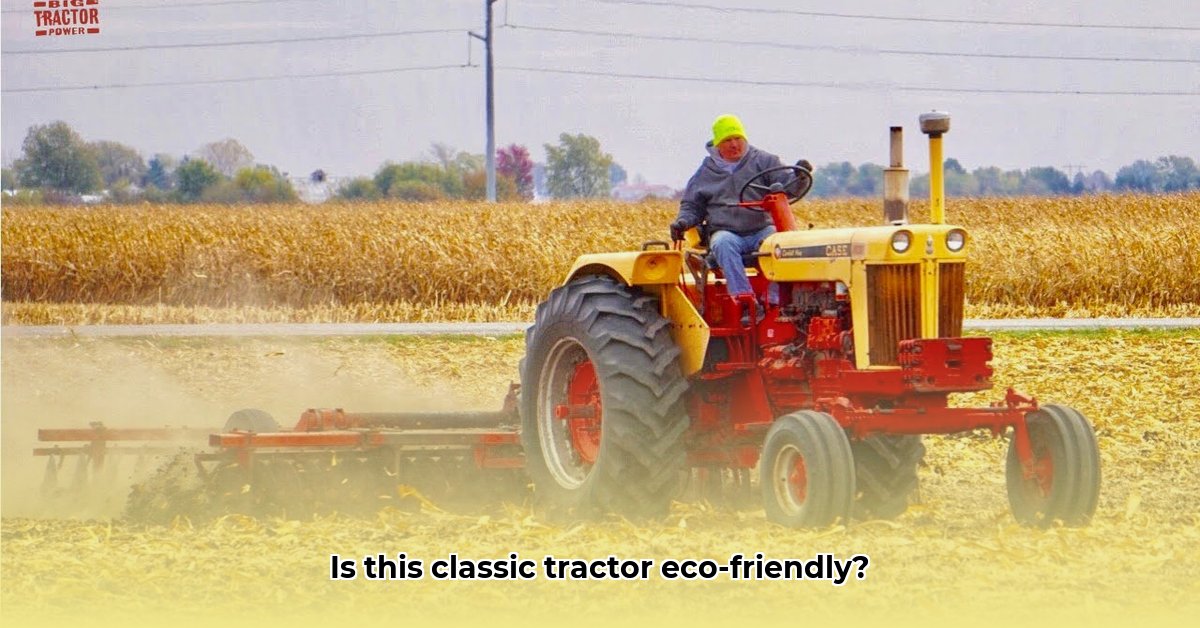
The JI Case 1030 tractor, produced between 1966 and 1969, represents a fascinating intersection of agricultural history and modern sustainability concerns. While approximately 13,763 units were manufactured, costing a substantial $10,300 in 1969, its current market value hovers around $5,500, indicating a shift towards collector interest. But beyond its nostalgic appeal, what role does this vintage machine play in the context of sustainable farming practices? Is it a relic of the past, or a surprisingly relevant piece of a sustainable future? For more on antique tractors, see this helpful resource.
The Case 1030: Specifications and Market Position
The Case 1030 was a powerful tractor for its time, equipped with a robust engine, ample fuel tank, and innovative (for the era) drivetrain. Specific specifications varied slightly by model. However, its scarcity in today's market highlights the complexities of assessing its long-term sustainability. While its current value reflects collector demand, a comprehensive understanding of its lifecycle environmental impact remains elusive. How does its fuel consumption compare to modern tractors? What about maintenance requirements over its lifespan? These are crucial questions that lack definitive answers.
Sustainability: A Complex Equation
Assessing the sustainability of the Case 1030 requires a nuanced approach. While limited readily-available data complicates a direct comparison to modern tractors on metrics like fuel efficiency and emissions, it should be noted that these older tractors often had simpler designs and fewer electronic components. Could this translate to a smaller environmental footprint over its entire lifecycle, particularly considering the significant resource inputs required to produce a new tractor? This raises a fundamental question: Did the reduced technological complexity offset the less efficient engine technology?
A Research Opportunity: Unveiling the Truth
The lack of comprehensive data regarding the Case 1030's long-term environmental impact presents a unique research opportunity. A comparative study analyzing its lifecycle environmental footprint alongside its modern counterparts could provide valuable insights. By exploring fuel consumption, maintenance needs, and overall emissions over the operational lifespan of such tractors, researchers could redefine how we assess the sustainability of agricultural machinery, both past and present. Moreover, this comparative analysis could inform the development of more sustainable equipment in the future.
Collaborative Research: A Call to Action
This research requires a multi-faceted approach, involving several key stakeholder groups.
Tractor Collectors and Enthusiasts: These individuals possess invaluable firsthand experience with the Case 1030. By meticulously documenting operational details such as fuel consumption, maintenance logs, and repair histories, individual owners can provide crucial data for analysis.
Agricultural Historians: Archive research, focusing on original manuals, sales brochures, and related historical documentation, can provide important context and fill gaps in our understanding of the Case 1030's design and operational characteristics.
Sustainable Agriculture Researchers: These experts can provide the tools and methodologies required for lifecycle impact assessments (LCIA), comparing the Case 1030 to modern tractors while considering factors beyond fuel efficiency— such as material sourcing, manufacturing processes, and end-of-life management.
A Roadmap for Action: Short-Term and Long-Term Goals
To effectively achieve this research, a collaborative and structured approach is needed. The following table outlines short and long-term objectives for each stakeholder group:
| Stakeholder Group | Short-Term Goals (Next Year) | Long-Term Goals (3-5 Years) |
|---|---|---|
| Collectors/Enthusiasts | Document fuel consumption, maintenance, and repair data; share with researchers. | Establish a centralized database of Case 1030 operational data; foster community collaboration. |
| Agricultural Historians | Locate and analyze archival materials; publish findings in peer-reviewed journals. | Develop a comprehensive historical analysis of Case 1030's impact; disseminate findings to a wider audience. |
| Sustainable Agriculture Researchers | Conduct lifecycle assessments; compare with modern tractors using standardized metrics. | Publish peer-reviewed articles presenting quantified environmental impact comparisons; propose policy recommendations. |
This collaborative effort will result in a comprehensive understanding of the Case 1030's environmental impact, setting a precedent for future assessments of vintage farm equipment and informing the transition towards more sustainable agricultural practices. The Case 1030's legacy may ultimately be defined not by its age, but by the valuable insights it provides into the future of sustainable farming.